HAMAS RALLIES AT MINNESOTA STATE CAPITOL
source: http://www.powerlineblog.com/archives/2009/02/022713.php
Wednesday, February 4, 2009


ACTION ITEM - Support Free Speech
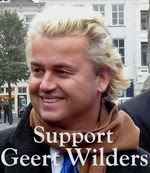
If Geert Wilders falls, then Freedom of Speech is dead in Europe.
We are launching an extensive International Action SITA including two possible texts ; one comparing Wilders and Winston Churchill and another Wilders and Charlie Chaplin:
http://sitamnesty.wordpress.com/2009/01/23/i-support-democrat-geert-winston-wilders-against-islamic-fascism-and-its-dhimmis
http://sitamnesty.wordpress.com/2009/01/23/i-support-democrat-geert-charlie-wilders-against-islamic-fascism (Charlie)
To support Geert Wilders and our dearly acquired freedoms please participate to the 2 suggested actions and transmit this message to your friends owners of a website in order they publish it..
Another way to support Geert Wilders is to give some money. To donate: www.geertwilders.nl
Tuesday, February 3, 2009
Obama's policies threaten US Safety
The column below by John Yoo, which appeared last Thursday in the Wall Street Journal, analyzes some of the decisions President Obama made in his first week as commander-in-chief.
Taken together, these decisions, as Yoo notes, “will seriously handicap our intelligence agencies from preventing future terrorist attacks.”
For instance, interrogators of terrorist suspects will be so restrained in their tactics that they won’t even be able to use “good cop/bad cop” techniques commonly used by police officers. In other words, interrogation tactics which have been legally used on our own citizens are, in Obama’s new world order of fighting terrorism, too extreme to be used on terrorist suspects.
This absurdity would be laughable if it weren’t so dangerous.
For the past few years Democrats assailed President Bush’s foreign policies, arguing that they made us “less safe.” Whatever one thinks of those policies, one incontrovertible fact remains: No terrorist attack was successfully executed in America on the President’s watch after 9/11.
According to intelligence experts one reason is the coercive interrogation techniques used to extract information from terrorist suspects and enemy combatants. With those now effectively jettisoned from our arsenal of self-defense, President Obama has put the nation at greater risk.
--------------------------------------------------------------------------------
Obama Made a Rash Decision on Gitmo
The president will soon realize that governing involves hard choices.
By JOHN YOO
During his first week as commander in chief, President Barack Obama ordered the closure of Guantanamo Bay and terminated the CIA's special authority to interrogate terrorists.
While these actions will certainly please his base -- gone are the cries of an "imperial presidency" -- they will also seriously handicap our intelligence agencies from preventing future terrorist attacks. In issuing these executive orders, Mr. Obama is returning America to the failed law enforcement approach to fighting terrorism that prevailed before Sept. 11, 2001. He's also drying up the most valuable sources of intelligence on al Qaeda, which, according to CIA Director Michael Hayden, has come largely out of the tough interrogation of high-level operatives during the early years of the war.
The question Mr. Obama should have asked right after the inaugural parade was: What will happen after we capture the next Khalid Sheikh Mohammed or Abu Zubaydah? Instead, he took action without a meeting of his full national security staff, and without a legal review of all the policy options available to meet the threats facing our country.
What such a review would have made clear is that the civilian law-enforcement system cannot prevent terrorist attacks. What is needed are the tools to gain vital intelligence, which is why, under President George W. Bush, the CIA could hold and interrogate high-value al Qaeda leaders. On the advice of his intelligence advisers, the president could have authorized coercive interrogation methods like those used by Israel and Great Britain in their antiterrorism campaigns. (He could even authorize waterboarding, which he did three times in the years after 9/11.)
Mr. Obama has also ordered that all military commission trials be stayed and that the case of Ali Saleh al-Marri, the only al Qaeda operative now held on U.S. soil, be reviewed. This seems a prelude to closing the military commissions down entirely and transferring the detainees' cases to U.S. civilian courts for prosecution under ordinary criminal law. Military commission trials have been used in most American wars, and their rules and procedures are designed around the need to protect intelligence sources and methods from revelation in open court.
It's also likely Mr. Obama will declare terrorists to be prisoners of war under the Geneva Conventions. The Bush administration classified terrorists -- well supported by legal and historical precedent -- like pirates, illegal combatants who do not fight on behalf of a nation and refuse to obey the laws of war.
The CIA must now conduct interrogations according to the rules of the Army Field Manual, which prohibits coercive techniques, threats and promises, and the good-cop bad-cop routines used in police stations throughout America. Mr. Obama has also ordered that al Qaeda leaders are to be protected from "outrages on personal dignity" and "humiliating and degrading treatment" in accord with the Geneva Conventions. His new order amounts to requiring -- on penalty of prosecution -- that CIA interrogators be polite. Coercive measures are unwisely banned with no exceptions, regardless of the danger confronting the country.
Eliminating the Bush system will mean that we will get no more information from captured al Qaeda terrorists. Every prisoner will have the right to a lawyer (which they will surely demand), the right to remain silent, and the right to a speedy trial.
The first thing any lawyer will do is tell his clients to shut up. The KSMs or Abu Zubaydahs of the future will respond to no verbal questioning or trickery -- which is precisely why the Bush administration felt compelled to use more coercive measures in the first place. Our soldiers and agents in the field will have to run more risks as they must secure physical evidence at the point of capture and maintain a chain of custody that will stand up to the standards of a civilian court.
Relying on the civilian justice system not only robs us of the most effective intelligence tool to avert future attacks, it provides an opportunity for our enemies to obtain intelligence on us. If terrorists are now to be treated as ordinary criminals, their defense lawyers will insist that the government produce in open court all U.S. intelligence on their client along with the methods used by the CIA and NSA to get it. A defendant's constitutional right to demand the government's files often forces prosecutors to offer plea bargains to spies rather than risk disclosure of intelligence secrets.
Zacarias Moussaoui, the only member of the 9/11 cell arrested before the attack, turned his trial into a circus by making such demands. He was convicted after four years of pretrial wrangling only because he chose to plead guilty. Expect more of this, but with far more valuable intelligence at stake.
It is naïve to say, as Mr. Obama did in his inaugural speech, that we can "reject as false the choice between our safety and our ideals." That high-flying rhetoric means that we must give al Qaeda -- a hardened enemy committed to our destruction -- the same rights as garden-variety criminals at the cost of losing critical intelligence about real, future threats.
Government policy choices are all about trade-offs, which cannot simply be wished away by rhetoric. Mr. Obama seems to have respected these realities in his hesitation to end the NSA's electronic surveillance programs, or to stop the use of predator drones to target individual al Qaeda leaders.
But in his decisions taken so precipitously just two days after the inauguration, Mr. Obama may have opened the door to further terrorist acts on U.S. soil by shattering some of the nation's most critical defenses.
Mr. Yoo is a law professor at the University of California, Berkeley and a visiting professor at Chapman Law School. He was an official in the Justice Department from 2001-03 and is a visiting scholar at the American Enterprise Institute.
--------------------------------------------------------------------
ACT for America
P.O. Box 12765
Pensacola, FL 32591
Wake Up America - CAIR , American Muslims largest advocacy group a terrorist front for Hamas
From Congresswoman Sue Myrick
FBI Cuts Ties With Council on American-Islamic Relations (CAIR)
In April 2008, Rep. Myrick released her Wake Up America Agenda. One of ten points in this plan called for an investigation of the Council on American-Islamic Relations (CAIR).
Less than a year later, the FBI has cut all ties with CAIR. The organization is listed as an un-indicted co-conspirator in an FBI case involving Hamas fundraisers. Hamas is identified as a terrorist organization by the United States.
Click here for a news clip on the FBI's actions.
We just wanted you to know that our relentless pursuit of those who wish to bring harm to America is paying off.
FBI cuts ties with Terrorist Front Group, CAIR
Whining about being victims AGAIN, even though the FBI has unrefutable evidence to the contrary! CAIR is a front group for Hamas! Congraulations to the FBI for finally waking up! CAIR go to hell.
Monday, February 2, 2009
OBAMA COZIES UP TO THE PRINCIPAL ENEMY OF FREE SPEECH IN THE WORLD TODAY
Obama cozies up to the principal enemy of free speech in the world today
Free Speech Death Watch Update: Obama sends a conciliatory letter to the Organization of the Islamic Conference, the foremost foe of free speech in the world today. "Obama says US can work with Muslims: OIC," from AFP, February 1 (thanks to Paul):
RIYADH - President Barack Obama told the Organisation of Islamic Conference that he has full confidence that the United States can work together with the world's largest grouping of Muslims, the OIC said on Sunday.
Paul, who kindly sent me this item, writes: "Really? And how does this promise of comity square with the conflict between our core value of free expression, affirmed by the First Amendment to our Consitution, and Item VII, Clause 3 of the OIC's Ten-Year Programme of Action: 'Endeavor to have the United Nations adopt an international resolution to counter Islamophobia, and call upon all States to enact laws to counter it, including deterrent punishments'? On the third anniversary of the outbreak of cartoon rage, this is hardly an academic question."
Good point.
You can find that Programme of Action here.
In a letter to OIC Secretary General Ekmeleddin Ihasanoglu, Obama said he would work to improve relations with the group, the Jeddah-based organisation said in a statement.
It did not release the text of the letter.
Obama also thanked the OIC, which represents 1.5 billion Muslims in 57 countries, for its congratulations on the occasion of his inauguration on January 20, the organisation said....
Source: www.jihadwatch.com
How I Survived Gaza by Golani Brigade Soldier
Eleven days ago today, Israel terminated an operation after having reached a state of cease-fire with a cowardly and murderous foe. We pulled out of Gaza. I pulled out of Gaza.
We were first called up on a Shabbat, right at the end of ten months of regular training and an extra two months of specialized training with the whole brigade in the Golan Heights. We were told that Israel was preparing for a possible conflict with Gaza. We were allowed to stay in phone contact at the beginning, and we listened for news from our families, always better informed than the army. We heard the bombs falling near the Strip, and readied our gear. And we waited. And waited. Every day another rumor came in.
“We’re going today”
“We’re going today”
We waited a week.
We were sent the following Shabbat.
The first time we came back out, after twenty four hours, our unit was under the impression that all the other units would be coming out as well. A little R & R, and then back in. But only our soldiers arrived at the base. The others were in till the very end.
The next two weeks we were deployed over and over again into neighborhoods whose names are ingrained as if from childhood memory, and we were told to ready ourselves for the final operational steps the army was preparing.
Thank God, for us, those steps never came. After fighting through less densely packed urban neighborhoods and villages, as an army, we never had to enter the tightly packed urban nightmares of the inner cities.
“The world is already trying to fault Israel, telling everyone that civilians died, and Israelis murdered. But I was there. I saw the twelve year olds with missiles and RPGs strapped to their backs. We watched in anger as our bombs, so as not to fall on large civilian centers, fell on our own troops.”
A cease-fire was signed, and we pulled out with hatches open on our vehicles, waving flags and flashing the peace symbol even though no one was there to photograph it. After all, we were one of hundreds of squads returning. There was no way to record every tank and APC that came home. But it was cathartic, and made it official.
I saw many things. I heard things. While I was in Gaza.
I saw soldiers who were virulently anti-religious don tzitit under their bullet-proof armor. As one soldier said, “Why do I put it on now, if I never wore it before? When do you ask your father for help? When you need it.”
I saw heroes. Boys just out of high-school, young men who should have been playing sports or starting families or going to college, loading weapons and placing armor on their fragile frames, securing helmets, and checking gear.
They suppressed the fear that lurked at the edges of their minds, and as a unit swept across the fence and planted unwavering lines of boots in the soil of Gaza. I watched them fight like grown men against evil.
The first night we went in, we were unable to wear bullet-proof armor in my unit, and had to settle for flak vests (we couldn’t wear armor when we first went in because, due to the weight we were carrying, it would have hampered our movements, creating a safety hazard). My young commander, who had an easy load to carry that wouldn’t interfere with his vest, still left without bulletproof armor. “If my men don’t, I don’t”. I told him the next day, I would have followed him through the entire Arab world if need be, my respect for him was so great. I saw my brave wife, Chana, who came down to volunteer, just to be close to me, braving rockets and missiles, and watched her help soldiers by handing out desperately needed winter gear and food. I watched Chabadniks who came to us every day and inspired the soldiers with song and mitzvot. I saw heroes praying for our safety, and feeding us, and caring for us.
I saw pain. Just today, I ran into yet another friend from another unit, who tells me, when asked how he is, “I am fine from the neck down.” Sixteen of his friends were injured in a blast on the first night. He lost many more before the end. He is still sweet, still charming, but his laugh is more weary, and his eyes are sadder. Another friend in a different unit lost two-thirds of his whole platoon when a bomb destroyed their house. He says he walked in, and he saw limbs moving or laying still, and bodies unattached to them, hurting, dead. He still hasn’t pulled back completely. A former commander of mine died, and a friend lost his arm and use of his legs, and is still in a coma.
I saw lies. The world is already trying to fault Israel, telling everyone that civilians died, and Israelis murdered. But I was there. My feet were on the ground and I saw the truth. I saw that warnings were given, I saw the enemy that fought us. I saw the twelve year olds with missiles and RPGs strapped to their backs. I saw that it was with sadness and great anger Israeli troops recognized the need to fire on people who crossed the red line, the danger zone which meant they saw us, and knew where we were. Old people mined with bombs, children armed with detonators, tunnels that opened in the ground to swallow our soldiers. I watched my commanders passing out all of our food to the children who were taken prisoner. I received the commands “closed to fire on the right” if our intelligence had reported civilians in the area. I watched us, more often then not, taking cover when supposed civilian positions fired on us from “the right”. Yet the world thinks it can bend the truth. We were
not allowed to fire on schools. We were told not to loot. We watched in anger as our bombs, so as not to fall on large civilian centers, fell on our own troops, so that we could tell the world we were attempting to scare the enemy while limiting civilian losses.
Yet they won’t say that in the press.
You are the reason we returned. You are the reason I am alive.
I saw cowardice. We listened with concern when Hamas threatened to use snipers and bombs on us, to fight us every step of the way with their fifteen thousand man army, and we watched videos of full brigades parading, waving their weapons and threatening Israel. But as we invaded, they fled.
They would attack in small groups, hit us with missiles and sniper fire, and then flee. The ‘warriors’ of Hamas were brave when their rockets fell unanswered on the schools of children and the homes of elderly, but they did not stand when the enemy called them up to answer for their crimes.
I saw miracles. Rockets that blazed past our houses, bullets that scarred the outside of windows we were watching from. A unit near ours that was walking in to Gaza had RPGs pass straight between their ranks without hitting a single soldier. Mines that didn’t explode, mortar rounds that landed next to friends that didn’t explode. RPGs that blazed into the earthen barrier directly in front of our APC, detonating before penetration.
The night walk through a neighborhood that wasn’t on the map, that was full of snipers and mines according to reports, that we walked through unawares, by accident, without harm or incident. And that was just what we knew.
I felt fear. Every time I entered, every time I squeezed the trigger, every time a missile landed nearby, I was struck with fear. It is a deep fear, hard to explain. Your body shivers as if you are frozen to the core. You find yourself staring at the ground, trying to adjust to the ringing in your ears. You freeze, and unless someone slaps you, or you manage to shake yourself, your eyes stay downcast, and you lay numb on the earth, waiting without realizing. Eventually, your training pulls you out and forces you to stay alert, your gun snaps up, and adrenaline masks the fear and hurt. You roll on seemingly fearless, with adrenaline telling you that you are invincible.
I have felt weakness. I have felt my supposedly mighty muscles shudder, felt my devastatingly powerful weapon shake in my hands, felt my heart hammer against my armor, felt my soul and mind search for some way to avoid pain and the nightmares that were becoming real.
I felt strength. I would have been lost, but for the words of my Rebbe. “Ein od Milvado” There is no one but Him. The mere utterance strengthened limbs, and a surge of faith and hope carried me through the invasion, through the detonations and whistling of ricocheting rounds and falling bombs. For I knew, for once KNEW and understood absolutely that I was in the hands of the greatest general on earth. A veteran of every war and every conflict, the ultimate warrior and defender of His people. I remember the joy that swept through the lines when they said the head commander was entering the field, because of his experience and strategies, everyone felt safer. It reminded me that an even greater Commander had been there all along. I understood the words of Tehilim 147, “Not in the strength of the horse does He desire, and not in the legs of man does He favor. God favors those who fear Him, those who hope for His kindness.” My strength had failed me, yet when I begged God to allow me to
be a conduit for His strength, to be His shield and a sword for His people, I was able to stand and fight. Those nights, my body was there, but God fought on that field.
I am not free of sin, and was by no means worthy of the miracles that befell me. That God aided me; that my entire battalion walked out, against all odds, while every other unit suffered losses, without serious casualty or mental scarring, was a miracle beyond any. That I was able to feel His strength replace mine, a gift for which I was undeserving.
My strength lay in the thousands of people who prayed for me, who prayed for the wellbeing of the army, who cried for the return of the fragile and precious Jewish youth who fought like lions where men twice their age would have fled. You are the reason we returned. You are the reason I am alive.
You, the people who pray and cry and feel you are not the front lines, are truly the army of Hashem. The IDF, as people should see, is merely the physical arm of what your prayers accomplish. You are the ones in the battle. We are the holding action, delaying the physical evil while you battle to clear the path for Moshiach. Never again will I feel a yeshiva student who learns all day is not brave for not being with us on this field.
Because I watched the words and letters that he learned and prayed march ahead of us, thousands deep, and millions strong, absorbing the bullets and metal meant for me. I thank you, humbly, warriors of my heart and faith. You let me come home to my wife.
During this war, we received a tremendous outpouring of love and support; letters, donations, food, and clothing. In specific, because I know them, although without diminishing the greatness of all the people I don’t know, I want to thank my mother and her tireless blogging efforts, my family for their support and letters, my wife for being brave beyond any woman or man I have ever known.
I want to thank Congregation Tiferes Yisroel for remembering an old neighborhood kid, and multiplying that to help all my brothers in uniform. I want to thank all of the community in Baltimore for the davening and love that we felt even in the heart of darkness.
I want to thank the little six-year old who wrote, “Dear IDF, I am proud of you.” I cried over that letter, my tears running through the pain and stress as we recovered from Gaza.
I want to thank the people who donated money for the vests that saved our lives, the people that gave us clothes to warm our bodies, candy to warm our hearts, and letters to warm our souls. You cannot know what one pair of socks, one chocolate bar, or one hastily written sentence can do to save the minds and hearts of your children from despair.
I am not as gifted with words as my mother, nor a hero as great as those who marched beside me or filled the air with prayer around me, but I hope from this letter, from my fumbling thoughts you can draw for yourself the love and hope I am trying to convey.
I have seen this people, my people, at its best and at its worst. I can see why Redemption will come soon. As a nation, we drew together. Disunity, differences in Kippot or sects fell away, and everyone reached out to help as best they could. No one said, “I have no part” or “This isn’t my war”.
May Hashem see the greatness of His holy, beautiful people, and allow me to sing that old song to my child, with absolute truth and great joy: “I promise, my little one, that this is the last war.”
Joshua Eastman made aliyah from Baltimore in 2005. He met his wife, Chana, on a trip back to Baltimore; and the two of them live in Givat Ze’ev. Joshua is currently a full-time soldier in the Golani Brigade of the Israel Defense Forces. When he can get near a computer, he blogs about his life in Israel at “Through Josh-Colored Glasses,”
Copyright © 1994-2009 Yahoo! Inc. from the Walid Shoebat Foundation
Subscribe to:
Posts (Atom)


 Posts